Why does a woman who desires, demands, and speaks for herself still provoke such unease?
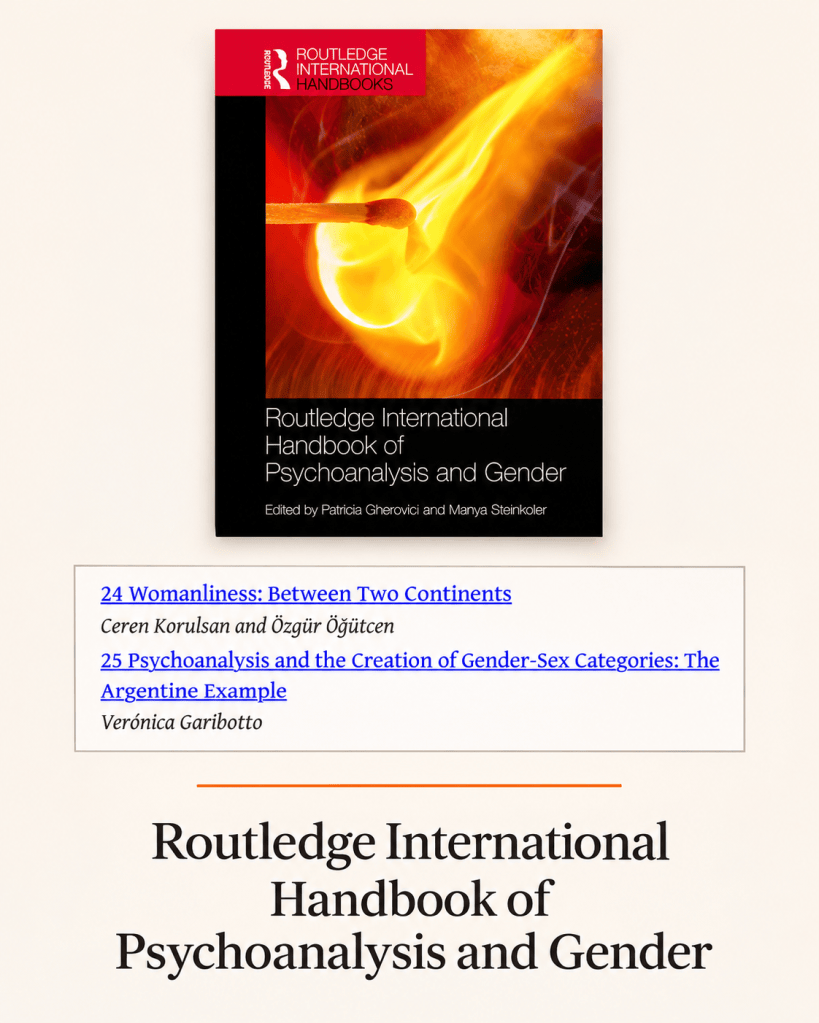
In “Womanliness: Between Two Continents,” published in the Routledge International Handbook of Psychoanalysis and Gender, Ceren Korulsan and Özgür Öğütcen explore how womanhood has been defined, idealized, and constrained in Turkey, at the intersection of psychic life and political history.
Bringing Freud and Joan Riviere into dialogue with Jacques Lacan, the authors examine the fantasies that place women at the center of competing visions of society. Lacan’s provocative assertion that “Woman does not exist” provides a crucial thread: no universal definition can encompass every woman’s singular experience and desire. Through this lens, the article explores how secular and religious projects alike enlist women as embodiments of collective ideals while restricting their emergence as desiring subjects.
(daha…)